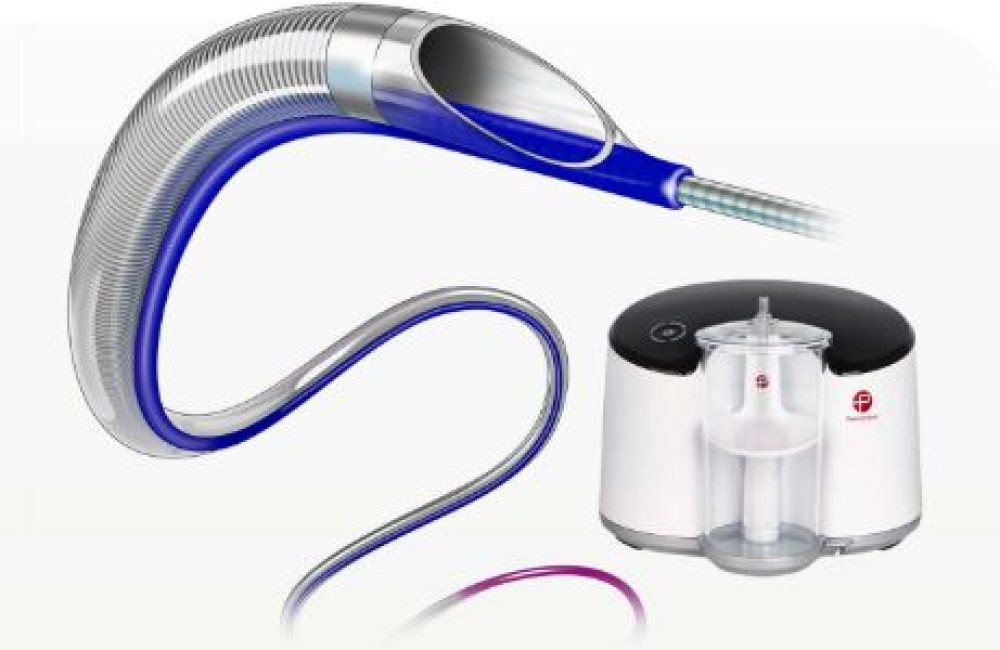
Thromboaspiration is a minimally invasive endovascular technique used to remove blood clots (thrombi or emboli) from arteries or veins. Instead of traditional open surgery, this procedure uses specialized catheter systems—such as Penumbra or AngioJet—to aspirate or fragment clots directly through blood vessels.
It has become an important tool in the management of conditions like acute ischemic stroke, acute limb ischemia, deep vein thrombosis (DVT), and pulmonary embolism. By restoring blood flow rapidly, thromboaspiration helps save tissue, reduce long-term disability, and, in many cases, save lives.
The human vascular system comprises arteries, veins, and capillaries responsible for circulating blood throughout the body.
Arteries carry oxygenated blood away from the heart to tissues.
Veins return deoxygenated blood back to the heart.
When a blood clot blocks a vessel, oxygen supply to tissues is interrupted, leading to ischemia. In the brain, this causes a stroke; in the heart, a myocardial infarction; in the limbs, acute ischemia; and in the lungs, a pulmonary embolism.
Traditional clot treatments included anticoagulants, thrombolytics (clot-dissolving drugs), and open surgery. Thromboaspiration now offers a faster, catheter-based alternative with less trauma, often performed in a hybrid operating room or catheterization laboratory.
Blood clots develop due to multiple factors, often explained by Virchow’s triad:
Stasis of blood flow – immobility, prolonged travel, or paralysis.
Endothelial injury – trauma, surgery, atherosclerosis, or vascular procedures.
Hypercoagulability – inherited or acquired clotting disorders, cancer, pregnancy, or use of oral contraceptives.
Specific causes include:
Atrial fibrillation (irregular heart rhythm, leading to clots in the atria).
Atherosclerotic plaque rupture in arteries.
Trauma or fractures causing vessel injury.
Postoperative states (especially after orthopedic or vascular surgery).
Deep vein thrombosis (DVT), which can progress to pulmonary embolism.
Symptoms vary depending on the site of the clot:
Brain (ischemic stroke): sudden weakness, facial droop, slurred speech, vision changes.
Limbs (acute limb ischemia): severe pain, pale or cold skin, numbness, weakness, loss of pulses.
Lungs (pulmonary embolism): chest pain, shortness of breath, coughing up blood, rapid heart rate.
Veins (DVT): leg swelling, redness, warmth, pain on walking or touching.
Because these are often emergencies, recognizing symptoms early and seeking urgent care is crucial.
Diagnosis involves both clinical assessment and imaging studies:
Physical examination – checking pulses, limb color, neurological status.
Doppler ultrasound – for venous or peripheral arterial clots.
CT Angiography (CTA) – widely used to locate and size clots in the brain, lungs, or limbs.
MR Angiography (MRA) – useful in selected patients.
Conventional angiography – provides real-time imaging and is often performed immediately before thromboaspiration.
Blood tests – including D-dimer, coagulation profile, kidney function (important for contrast use).
The goal of treatment is to restore blood flow quickly and prevent further clotting.
Non-surgical treatments:
Anticoagulants (heparin, warfarin, DOACs): prevent clot growth.
Thrombolysis: intravenous or catheter-directed delivery of clot-dissolving drugs (e.g., tPA).
Procedural / surgical treatments:
Thromboaspiration (Penumbra, AngioJet): mechanical removal of clots via specialized catheters.
Surgical thrombectomy / embolectomy: open surgery in severe or refractory cases.
Bypass surgery: to reroute blood flow around severely blocked arteries.
Thromboaspiration is performed in a catheterization lab under imaging guidance.
Preparation – The patient is stabilized, anticoagulated, and positioned. Local or general anesthesia may be given.
Vascular access – A sheath is inserted into a large vessel (commonly femoral artery or vein).
Navigation – Under fluoroscopic guidance, a catheter is advanced to the site of the clot.
Device activation –
Penumbra system uses continuous suction through a large-bore catheter to aspirate the clot. Some versions combine aspiration with a separator wire or mechanical clot disruption.
AngioJet system uses high-pressure saline jets to fragment the clot while creating a vacuum effect to aspirate debris.
Clot removal – The clot is gradually aspirated until blood flow is restored.
Completion angiography – Confirms vessel patency and adequate circulation.
Closure – Access site is sealed with pressure or closure devices.
This minimally invasive method often avoids the need for open surgery and offers quicker recovery.
Following thromboaspiration, patients are closely monitored in a hospital setting:
Anticoagulation therapy continues to prevent new clots.
Pain management and wound care at the puncture site.
Monitoring for reperfusion injury or bleeding.
Neurological rehabilitation if the procedure was for ischemic stroke.
Physiotherapy for limb ischemia patients to restore mobility.
Lifestyle changes – quitting smoking, healthy diet, regular exercise, and control of diabetes, hypertension, and cholesterol.
Regular follow-up with vascular specialists and repeat imaging if needed.
Though safer than open surgery, thromboaspiration has potential risks:
Bleeding from the access site or due to anticoagulation.
Vessel injury or perforation.
Distal embolization (clot fragments traveling further downstream).
Allergic reaction to contrast dye.
Kidney injury from contrast exposure.
Reperfusion injury (swelling or tissue damage when blood flow returns).
Incomplete clot removal, requiring additional procedures.
Seek immediate medical care if you experience:
Sudden weakness, speech difficulties, or vision loss (possible stroke).
Severe limb pain, coldness, or loss of pulses.
Chest pain, shortness of breath, or coughing blood (possible pulmonary embolism).
Unexplained leg swelling, redness, or tenderness (possible DVT).
Early recognition and treatment are critical for survival and recovery.
Thromboaspiration with advanced systems like Penumbra and AngioJet has revolutionized the management of acute blood clots. By offering a minimally invasive, rapid, and effective way to restore blood flow, it reduces the risks of permanent disability and limb loss. While anticoagulation and thrombolysis remain important, thromboaspiration provides an essential option when quick clot removal is needed.
Anyone experiencing sudden neurological symptoms, severe limb pain, or unexplained breathing problems should seek emergency medical attention. With timely treatment, thromboaspiration can make the difference between recovery and life-changing complications.

Aenean porta orci nam commodo felis hac ridiculus fusce fames maximus erat sed dictumst blandit arcu suspendisse sollicitudin luctus in nec