Carotid Artery Aneurysm

Carotid Artery Aneurysm

A carotid artery aneurysm is a rare but potentially serious vascular condition characterized by an abnormal dilation or bulging of the carotid artery wall. The carotid arteries are major blood vessels in the neck that supply oxygen-rich blood to the brain, face, and neck. When an aneurysm develops in these arteries, it can lead to life-threatening complications such as stroke, rupture, or embolism. Early recognition and appropriate management of carotid artery aneurysms are crucial to prevent severe neurological damage and improve patient outcomes. This article provides a detailed overview of carotid artery aneurysms, including their anatomy, causes, symptoms, diagnosis, treatment options, and prognosis.

Anatomy / Background

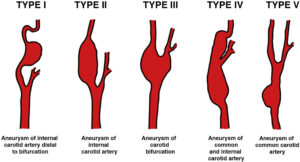
The carotid arteries consist of two main vessels on each side of the neck: the common carotid artery (CCA), which bifurcates into the internal carotid artery (ICA) and the external carotid artery (ECA). The ICA primarily supplies blood to the brain, while the ECA supplies the face and scalp. The arterial wall is composed of three layers: the intima (inner layer), media (middle muscular layer), and adventitia (outer connective tissue layer). Aneurysms occur when the arterial wall weakens, causing a localized dilation that can vary in size and shape.

Carotid artery aneurysms can be classified as true aneurysms, involving all three layers of the arterial wall, or pseudoaneurysms (false aneurysms), where there is a breach in the arterial wall and blood collects outside the vessel layers but is contained by surrounding tissues. Understanding the anatomy is essential for diagnosis and treatment planning.

Causes / Etiology

Several factors contribute to the development of carotid artery aneurysms, including:

Symptoms / Clinical Presentation

Carotid artery aneurysms may be asymptomatic, especially when small. When symptoms occur, they often relate to the aneurysm’s size, location, and complications:

  • Pulsatile Neck Mass: A noticeable, throbbing lump in the neck.
  • Pain or Tenderness: Localized discomfort or pain in the neck region.
  • Neurological Symptoms: Transient ischemic attacks (TIAs), stroke symptoms such as weakness, numbness, speech difficulties, or vision changes due to embolism or reduced cerebral blood flow.
  • Cranial Nerve Palsies: Compression of nearby nerves may cause hoarseness, difficulty swallowing, or facial weakness.
  • Bruit: A whooshing sound heard over the artery with a stethoscope.
  • Rupture: Sudden severe neck pain, swelling, and life-threatening hemorrhage (rare but critical).

Diagnosis

Diagnosis of carotid artery aneurysm involves a combination of clinical evaluation and imaging studies:

Treatment Options

Treatment depends on the aneurysm’s size, symptoms, risk of rupture, and patient health status. Options include:

Non-Surgical Management

  • Observation: Small, asymptomatic aneurysms may be monitored with regular imaging.
  • Medical Therapy: Control of risk factors such as hypertension, hyperlipidemia, and smoking cessation.
  • Antiplatelet or Anticoagulant Therapy: To reduce the risk of thromboembolism.

Surgical and Endovascular Treatments

  • Open Surgical Repair: Involves aneurysm excision and arterial reconstruction using grafts or direct repair.
  • Endovascular Repair: Minimally invasive techniques such as stent graft placement to exclude the aneurysm from circulation.
  • Hybrid Approaches: Combining open and endovascular methods in complex cases.

Procedure Details (Surgical)

Open surgical repair typically involves the following steps:

  1. Anesthesia: General anesthesia is administered.
  2. Incision: A longitudinal incision is made along the anterior border of the sternocleidomastoid muscle.
  3. Exposure: The carotid artery is carefully dissected and exposed.
  4. Control: Proximal and distal control of the artery is obtained using vascular clamps.
  5. Aneurysm Resection: The aneurysm sac is opened and removed.
  6. Reconstruction: The artery is repaired either by direct end-to-end anastomosis or by interposition grafting using autologous vein or synthetic graft.
  7. Hemostasis and Closure: Bleeding is controlled, and the incision is closed in layers.

Endovascular repair involves:

  1. Access: Usually via the femoral artery.
  2. Catheter Navigation: A catheter is guided to the carotid artery under fluoroscopic guidance.
  3. Stent Deployment: A covered stent is placed across the aneurysm to exclude it from blood flow.
  4. Completion Angiography: Confirms successful exclusion of the aneurysm.

Postoperative Care / Rehabilitation

  • Monitoring: Vital signs, neurological status, and wound site are closely observed.
  • Medications: Antiplatelet agents are often prescribed to prevent thrombosis.
  • Imaging Follow-up: Regular ultrasound or CTA to assess repair integrity.
  • Physical Therapy: May be needed if neurological deficits occurred.
  • Lifestyle Modifications: Control of blood pressure, cholesterol, and smoking cessation.
  • Long-term Surveillance: Lifelong monitoring is recommended to detect recurrence or new aneurysms.

Risks and Complications

Potential risks and complications include:

  • Stroke: Due to embolism or intraoperative ischemia.
  • Nerve Injury: Damage to cranial nerves causing hoarseness, dysphagia, or facial weakness.
  • Infection: Particularly in open surgical repair.
  • Bleeding or Hematoma: Postoperative hemorrhage can compromise airway.
  • Graft or Stent Failure: Leading to restenosis or aneurysm recurrence.
  • Rupture: Though rare, can be fatal if untreated.

Prognosis

With timely diagnosis and appropriate treatment, the prognosis for carotid artery aneurysm patients is generally favorable. Surgical and endovascular interventions have high success rates in preventing rupture and stroke. However, untreated aneurysms carry significant risks of neurological complications and mortality. Long-term outcomes depend on aneurysm size, patient comorbidities, and adherence to follow-up care.

When to See a Doctor

Seek medical attention if you experience:

  • A new or enlarging pulsatile mass in the neck.
  • Sudden neurological symptoms such as weakness, numbness, speech difficulties, or vision changes.
  • Persistent neck pain or tenderness.
  • Symptoms of stroke or transient ischemic attacks.
  • Any signs of infection or swelling in the neck region.

Early evaluation by a healthcare professional can facilitate prompt diagnosis and treatment, reducing the risk of serious complications.

Conclusion

Carotid artery aneurysms, though uncommon, pose significant health risks due to their potential to cause stroke or rupture. Understanding the anatomy, causes, symptoms, and diagnostic methods is essential for early detection. Treatment options range from careful monitoring to advanced surgical and endovascular procedures tailored to individual patient needs. Awareness of symptoms and timely medical consultation are critical for optimal outcomes. If you suspect you have a carotid artery aneurysm or are at risk, consult a vascular specialist or healthcare provider for comprehensive evaluation and management.
Explore more:

Welcome to
Dr Sahaja Vascular Surgeon

Aenean porta orci nam commodo felis hac ridiculus fusce fames maximus erat sed dictumst blandit arcu suspendisse sollicitudin luctus in nec


Make an Appointment.