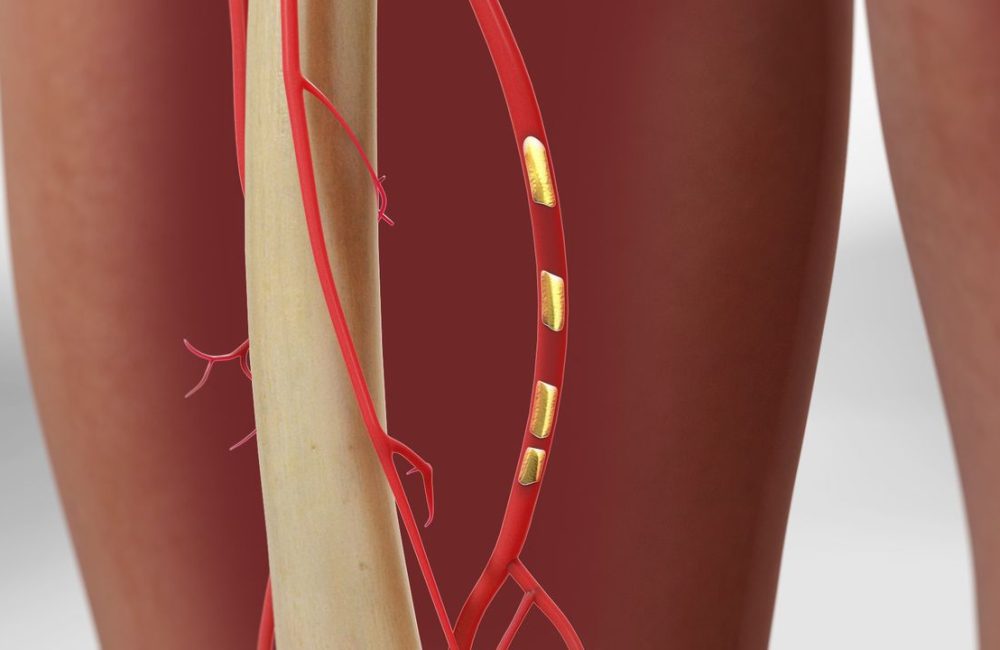
Peripheral arterial angioplasty is a minimally invasive procedure designed to open narrowed or blocked arteries in the legs (and occasionally arms) caused by peripheral arterial disease (PAD). By restoring blood flow, it helps relieve symptoms such as pain, cramping, and non-healing wounds, while also reducing the risk of severe complications like gangrene and amputation. As PAD is a growing global health problem linked to aging, diabetes, and smoking, angioplasty plays an important role in preserving mobility and quality of life.
The peripheral arteries supply oxygen-rich blood to the arms and legs. In the lower limbs, major vessels include the iliac, femoral, popliteal, and tibial arteries. When these arteries become narrowed by fatty deposits (atherosclerosis), circulation is reduced. In mild cases, this may cause leg pain only during activity (claudication). In advanced cases, blood supply may be insufficient even at rest, leading to chronic limb ischemia, ulcers, or tissue loss. Restoring circulation through angioplasty improves tissue health and prevents progression of disease.
The most common cause of arterial narrowing requiring angioplasty is atherosclerosis. Several risk factors accelerate this process:
Smoking – damages arterial walls and promotes plaque formation.
Diabetes mellitus – increases the risk of severe PAD and poor healing.
High cholesterol and triglycerides – contribute to fatty deposits in arteries.
High blood pressure – damages arterial lining over time.
Obesity and sedentary lifestyle – reduce vascular health.
Age and family history – increase overall risk of vascular disease.
PAD that may require angioplasty often presents with:
Intermittent claudication – cramping or pain in the legs during walking or exercise, relieved by rest.
Rest pain – persistent pain in the feet or toes, especially at night.
Non-healing ulcers or wounds – often on the feet or lower legs.
Skin changes – discoloration, thinning, or coldness of the limb.
Weak or absent pulses – detected in the foot or ankle arteries.
Gangrene – blackened, dead tissue in severe cases.
A careful diagnostic approach is needed before angioplasty:
Clinical assessment – evaluation of risk factors, symptoms, and pulse examination.
Ankle-Brachial Index (ABI) – compares blood pressure in the ankle with that in the arm; a low ABI suggests PAD.
Doppler ultrasound – shows blood flow and areas of narrowing.
CT Angiography (CTA) / MR Angiography (MRA) – detailed imaging to map arteries.
Conventional Angiography – often performed before angioplasty to visualize blockages in real-time.
Not all PAD cases require angioplasty. Treatment options include:
Lifestyle modification – smoking cessation, exercise therapy, healthy diet.
Medications – antiplatelets (aspirin, clopidogrel), statins, blood pressure and blood sugar control.
Wound care – for ulcers or minor injuries.
Peripheral arterial angioplasty – opening narrowed arteries with a balloon, sometimes with stent placement.
Atherectomy – removal of plaque inside the artery.
Bypass surgery – creating an alternate pathway for blood using a vein or synthetic graft.
Amputation – last resort if the limb cannot be salvaged.
The angioplasty procedure is performed in a catheterization lab by a vascular specialist:
Preparation – patient is given local anesthesia and mild sedation; groin or wrist is cleaned and numbed.
Access – a small puncture is made into the femoral or radial artery.
Catheter insertion – a thin tube (catheter) is guided to the blocked artery under X-ray imaging.
Balloon inflation – a tiny balloon at the catheter tip is inflated at the blockage site to widen the artery.
Stent placement (if needed) – a small metal mesh tube may be placed to keep the artery open.
Completion – catheter is removed, and pressure or a closure device is applied to the puncture site.
The procedure usually takes 1–2 hours and most patients can go home within 24 hours.
Recovery after angioplasty is typically quicker than after open surgery:
Hospital stay – short monitoring for bleeding, clotting, or complications.
Medications – patients must take antiplatelet drugs (aspirin, clopidogrel) to prevent re-blockage.
Lifestyle changes – quitting smoking, controlling diabetes, blood pressure, and cholesterol.
Exercise therapy – walking programs to improve circulation.
Wound care – careful monitoring if ulcers or gangrene were present.
Follow-up – regular vascular check-ups and imaging (ultrasound, ABI).
While generally safe, angioplasty carries some risks:
Bleeding or hematoma at the puncture site.
Infection (rare).
Artery damage or rupture during the procedure.
Blood clots leading to sudden blockage.
Restenosis – artery narrowing again over time.
Allergic reaction to contrast dye.
Kidney damage in patients with pre-existing kidney disease (from contrast dye).
The outlook after peripheral arterial angioplasty is generally positive. The procedure effectively relieves symptoms, improves walking ability, and promotes wound healing in most patients. However, long-term success depends heavily on risk factor control. Without lifestyle modification and ongoing medical therapy, arteries may re-narrow. With proper care, many patients maintain improved circulation and avoid amputation.
Prompt medical attention should be sought if a person experiences:
Persistent or worsening leg pain, even at rest.
Wounds or ulcers that do not heal.
Changes in skin color, temperature, or sensation in the limb.
Sudden onset of cold, pale, or painful limb (possible acute ischemia).
Peripheral arterial angioplasty is a modern, minimally invasive procedure that restores blood flow in narrowed leg arteries, offering significant relief from pain and reducing the risk of limb loss. Alongside lifestyle changes and medical therapy, it forms the cornerstone of treatment for advanced PAD. Early recognition of symptoms and timely consultation with a vascular specialist are essential for achieving the best outcomes.

Aenean porta orci nam commodo felis hac ridiculus fusce fames maximus erat sed dictumst blandit arcu suspendisse sollicitudin luctus in nec