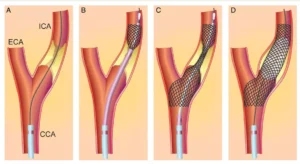
Carotid artery stenting (CAS) is a minimally invasive procedure designed to treat carotid artery disease, a condition characterized by narrowing or blockage of the carotid arteries. These arteries are critical blood vessels that supply oxygen-rich blood to the brain. When they become narrowed due to atherosclerosis, the risk of stroke significantly increases. CAS offers an alternative to traditional carotid endarterectomy surgery, aiming to restore adequate blood flow and reduce the risk of stroke. Understanding this procedure is essential for patients diagnosed with carotid artery disease and for those at risk of cerebrovascular events.
The carotid arteries are two major blood vessels located on each side of the neck. Each carotid artery branches into two parts:
The internal carotid artery is the primary focus in carotid artery disease because its narrowing can lead to reduced cerebral blood flow or embolism, causing transient ischemic attacks (TIAs) or strokes. The arterial walls can develop plaques composed of cholesterol, calcium, and other substances, leading to stenosis (narrowing) that impedes blood flow.
The primary cause of carotid artery stenosis is atherosclerosis, a condition where plaques build up inside the artery walls. Several risk factors contribute to the development of atherosclerosis and carotid artery disease:
Carotid artery disease may be asymptomatic in early stages. When symptoms occur, they often indicate transient or permanent cerebral ischemia:
Patients may also experience dizziness, confusion, or sudden severe headache, although these are less specific.
Diagnosis of carotid artery disease involves a combination of clinical evaluation and imaging studies:
Clinical Examination:
Imaging Studies:
Additional Tests:
Treatment aims to reduce stroke risk by managing the stenosis and underlying risk factors.
CAS is often preferred in patients at high surgical risk due to comorbidities or anatomical considerations.
Carotid artery stenting is performed by an interventional cardiologist or vascular surgeon in a catheterization laboratory under local anesthesia with sedation.
The procedure typically lasts 1 to 2 hours, and patients are monitored closely afterward.
While CAS is generally safe, potential risks include:
Careful patient selection and experienced operators minimize these risks.
Carotid artery stenting effectively reduces the risk of stroke in appropriately selected patients. Long-term outcomes depend on:
Studies show comparable stroke prevention rates between CAS and carotid endarterectomy, especially in high-risk surgical candidates.
Seek immediate medical attention if you experience:
For patients diagnosed with carotid artery disease, regular follow-up with a healthcare provider is essential to monitor the condition and discuss treatment options.
Carotid artery stenting is a vital procedure in the management of carotid artery disease, offering a less invasive alternative to surgery for stroke prevention. Understanding the anatomy, causes, symptoms, and treatment options empowers patients to make informed decisions. Early diagnosis and appropriate intervention, combined with lifestyle modifications and medical therapy, can significantly improve outcomes. If you or a loved one is at risk or experiencing symptoms, consult a healthcare professional promptly to explore the best treatment strategy tailored to your needs.

Aenean porta orci nam commodo felis hac ridiculus fusce fames maximus erat sed dictumst blandit arcu suspendisse sollicitudin luctus in nec