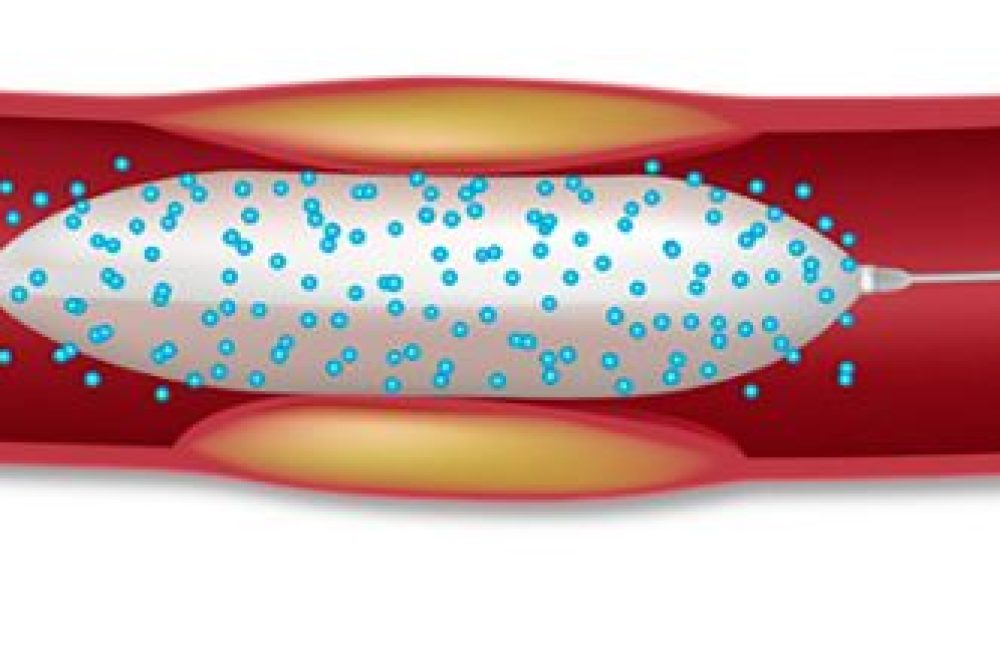
SFA Balloon Angioplasty and Stenting is a minimally invasive procedure used to treat blockages in the superficial femoral artery (SFA)—one of the major arteries supplying blood to the thigh and lower leg. When this artery becomes narrowed or blocked due to atherosclerosis, it can cause significant leg pain, difficulty walking, and, in severe cases, limb-threatening ischemia. Restoring blood flow through angioplasty and, when needed, stenting, improves circulation, relieves symptoms, and helps patients return to a more active lifestyle.
The superficial femoral artery (SFA) is a continuation of the common femoral artery in the upper thigh. It runs down the front of the thigh and transitions into the popliteal artery behind the knee, supplying blood to the lower leg and foot. Because the SFA is relatively long and exposed to movement and bending of the leg, it is particularly prone to developing atherosclerotic plaques and subsequent narrowing. Disease in this artery is a common cause of peripheral arterial disease (PAD).
The most common cause of SFA narrowing is atherosclerosis, a chronic condition where fatty deposits build up inside arterial walls. Several risk factors increase the likelihood of developing SFA disease:
Smoking – the leading risk factor for PAD.
Diabetes mellitus – accelerates arterial damage and impairs healing.
Hypertension (high blood pressure) – damages artery walls over time.
High cholesterol and triglycerides – contribute to plaque buildup.
Obesity and sedentary lifestyle – reduce vascular health.
Advanced age – PAD is more common in individuals over 60.
Family history of vascular disease – genetic predisposition increases risk.
Diagnosing SFA disease requires a combination of clinical examination and imaging studies:
Physical examination – checking for weak or absent pulses in the leg, skin changes, and non-healing wounds.
Ankle-Brachial Index (ABI) – comparing blood pressure at the ankle with that in the arm; a low ABI indicates PAD.
Duplex ultrasound – non-invasive imaging to visualize blood flow and detect blockages.
CT Angiography (CTA) or MR Angiography (MRA) – detailed imaging to map the arteries.
Digital Subtraction Angiography (DSA) – often used as the gold standard to confirm and precisely locate arterial narrowing before intervention.
Treatment depends on the severity of the blockage and symptoms:
Lifestyle modifications – smoking cessation, regular exercise, and dietary changes.
Medications – antiplatelet drugs (aspirin, clopidogrel), cholesterol-lowering agents (statins), and drugs for blood pressure and diabetes control.
Supervised exercise therapy – structured walking programs that improve circulation and walking distance.
Balloon angioplasty with or without stenting – the most common minimally invasive treatment for SFA blockages.
Bypass surgery – using a vein or synthetic graft to reroute blood around the blockage, reserved for long or complex lesions not amenable to angioplasty.
Hybrid procedures – combining open surgery with endovascular approaches in selected cases.
SFA angioplasty is typically performed under local anesthesia with sedation:
Access – A catheter is inserted through a puncture in the femoral artery (groin) or sometimes through the opposite groin.
Imaging – Contrast dye is injected, and X-ray images (angiography) identify the blockage.
Balloon angioplasty – A balloon-tipped catheter is advanced to the site of narrowing and inflated to widen the artery.
Stenting – A metallic mesh stent may be placed to keep the artery open, especially in longer or more complex lesions. Specialized stents (self-expanding or drug-eluting) are often used in the SFA to withstand leg movement.
Final angiography – Ensures improved blood flow before the catheter is removed.
Closure – The puncture site is sealed with manual pressure or a closure device.
The procedure usually lasts 1–2 hours, and most patients are discharged the same or following day.
Recovery after SFA angioplasty is generally smooth, but long-term care is crucial:
Monitoring – the puncture site is checked for bleeding or swelling.
Medications – patients are prescribed dual antiplatelet therapy (aspirin and clopidogrel) for several months, followed by lifelong single-agent therapy.
Lifestyle modification – quitting smoking, exercising, and healthy eating are essential for maintaining results.
Supervised walking programs – improve circulation and help prevent recurrence.
Follow-up care – regular duplex ultrasound or ABI testing to ensure stent patency.
Like any procedure, SFA angioplasty has potential risks:
Bleeding or hematoma at the puncture site.
Allergic reaction to contrast dye.
Arterial dissection or rupture during ballooning.
Restenosis – re-narrowing of the artery, particularly in long lesions.
Blood clots within the stent (stent thrombosis).
Kidney problems due to contrast dye exposure.
Infection (rare).
SFA angioplasty with stenting provides high initial success rates, with significant improvement in symptoms and walking ability. However, restenosis remains a concern, particularly in long or heavily calcified blockages. Modern stent technology, drug-coated balloons, and drug-eluting stents have improved long-term outcomes. Patients who adhere to medication and lifestyle changes generally experience lasting symptom relief and improved quality of life.
Seek medical advice if you experience:
Leg pain during walking that improves with rest (claudication).
Persistent foot pain at rest, especially at night.
Non-healing wounds or ulcers on the lower leg or foot.
Sudden worsening of leg pain, coldness, or discoloration.
Weak or absent pulses in the leg.
SFA Balloon Angioplasty and Stenting is a safe and effective minimally invasive treatment for restoring blood flow in the thigh arteries. It offers significant symptom relief, faster recovery, and reduced risks compared to open surgery. Early diagnosis and timely intervention, combined with strict risk factor management, are essential for long-term success. Patients experiencing leg pain, non-healing wounds, or other signs of poor circulation should consult a vascular specialist for evaluation and treatment.

Aenean porta orci nam commodo felis hac ridiculus fusce fames maximus erat sed dictumst blandit arcu suspendisse sollicitudin luctus in nec