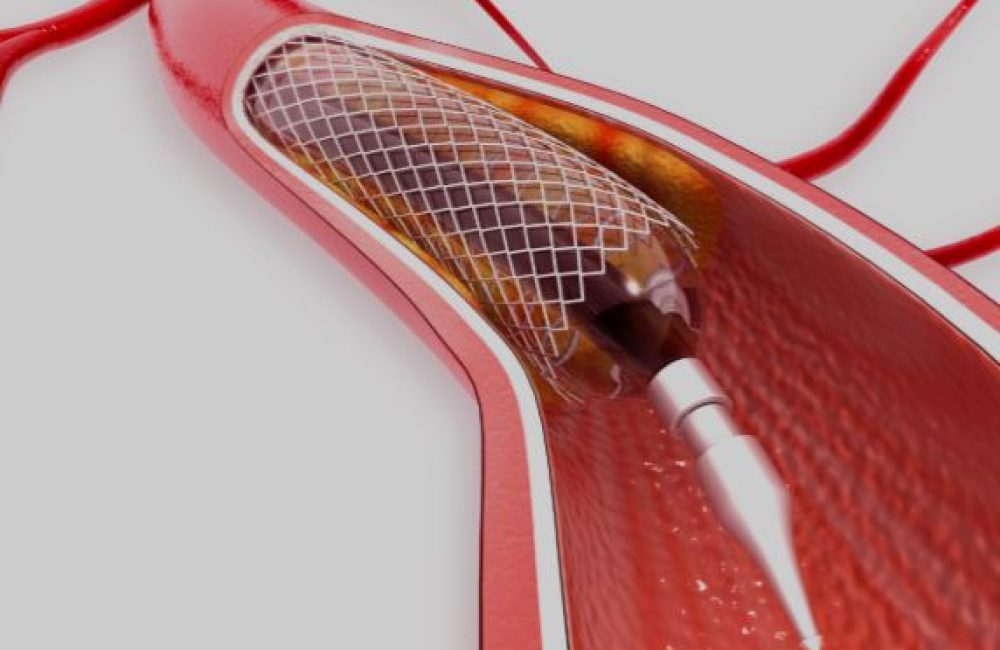
For patients undergoing long-term hemodialysis, a functional vascular access is essential. An arteriovenous fistula (AVF) is considered the best option for dialysis access due to its durability and lower infection risk. However, over time, narrowing of the blood vessels (stenosis) can occur, compromising blood flow. Fistula Angioplasty—also known as percutaneous transluminal angioplasty (PTA) of an AV fistula—is a minimally invasive procedure that restores adequate blood flow, ensuring the fistula continues to function effectively.
This procedure is a vital intervention for dialysis patients, helping prevent access failure, reducing complications, and improving dialysis efficiency.
An arteriovenous fistula is a surgically created connection between an artery and a vein, usually in the arm. This access allows high blood flow through the vein, making it strong enough to withstand repeated needle punctures for dialysis.
Over time, the following changes may occur:
Stenosis (narrowing): Caused by scarring, intimal hyperplasia (thickening of the vessel lining), or clotting.
Reduced flow: Limits the efficiency of dialysis.
Risk of thrombosis: Complete blockage may occur if stenosis is untreated.
Fistula angioplasty uses a special balloon catheter to widen narrowed segments, restoring adequate blood flow and prolonging the lifespan of the AVF.
Stenosis in an AV fistula can be due to:
Intimal hyperplasia: Thickening of the inner vessel lining due to increased shear stress and turbulent blood flow.
Repeated cannulation: Regular dialysis needle punctures can injure the vessel wall.
Scarring and fibrosis: Healing from small injuries leads to narrowing.
Thrombosis: Blood clots may form due to stagnant flow in narrowed areas.
Underlying conditions: Diabetes, hypertension, or vascular disease increase the risk.
Poor maturation: Some fistulas develop stenosis early, preventing them from maturing adequately for dialysis use.
Signs and symptoms of a failing or stenosed fistula include:
Decreased dialysis efficiency: Poor clearance of toxins during dialysis sessions.
Prolonged bleeding: After needle removal.
Swelling of the arm or hand: Due to poor venous return.
Weak or absent thrill/bruit: Normally, a fistula produces a vibration (thrill) or sound (bruit) from turbulent blood flow; reduced signals suggest narrowing.
Pain or discomfort: In the arm or around the access site.
Visible changes: Enlarged collateral veins or narrowing along the fistula track.
Diagnosis of fistula stenosis involves both clinical examination and imaging:
Physical examination: Checking for thrill, bruit, swelling, or prolonged bleeding.
Doppler ultrasound: First-line investigation to detect flow abnormalities and pinpoint the site of narrowing.
Fistulography (angiography): Contrast dye and X-rays visualize the blood vessels and guide angioplasty.
Monitoring during dialysis: Low pump pressures, poor clearance, or alarms during dialysis can be early indicators.
Monitoring: Mild stenosis without symptoms may be observed.
Medical management: Anticoagulants or antiplatelet drugs may reduce clot formation but do not treat stenosis directly.
Fistula angioplasty: First-line treatment for significant stenosis.
Surgical revision: Reserved for recurrent or complex stenosis not responsive to angioplasty.
New fistula creation: If the existing access fails completely.
Fistula angioplasty is performed in a catheterization lab or interventional radiology suite.
Step-by-step process:
Preparation: Patient lies on an X-ray table, and the access arm is sterilized. Local anesthesia is usually sufficient.
Vessel access: A small sheath (tube) is inserted into the fistula.
Imaging: Contrast dye is injected to visualize the stenosis under fluoroscopy (real-time X-ray).
Balloon insertion: A catheter with a deflated balloon at its tip is advanced into the narrowed segment.
Balloon inflation: The balloon is gradually inflated, compressing plaque or scar tissue against the vessel wall and restoring the lumen size.
Assessment: After dilation, repeat imaging confirms adequate blood flow.
Completion: The catheter and sheath are removed, and pressure is applied to stop bleeding.
The entire procedure usually takes 30–60 minutes, and patients can often return home the same day.
After fistula angioplasty, patients require careful monitoring:
Observation: For bleeding or swelling at the puncture site.
Fistula assessment: Checking thrill and bruit to confirm good flow.
Medication: Blood thinners may be prescribed if clot risk is high.
Activity restrictions: Avoid heavy lifting or strenuous use of the access arm for 24–48 hours.
Follow-up imaging: Doppler ultrasound or fistulography may be scheduled to monitor long-term results.
Education: Patients are taught how to check their fistula daily by feeling for a thrill.
Although generally safe, fistula angioplasty has potential risks:
Vessel injury: Dissection or rupture of the fistula wall.
Re-stenosis: Narrowing can recur, requiring repeat angioplasty.
Thrombosis: Blood clot formation post-procedure.
Bleeding or hematoma: At the puncture site.
Infection: Rare but possible.
Allergic reaction: To contrast dye (uncommon).
The success rate of fistula angioplasty is high, with immediate improvement in blood flow in most patients. However, stenosis often recurs, and repeat angioplasty may be necessary. On average, patency after angioplasty lasts 6–12 months, though this varies by patient and fistula type.
With timely intervention, angioplasty significantly prolongs fistula survival, delaying the need for new access creation and reducing dialysis interruptions.
Patients should seek medical attention if they notice:
Absence or reduction in the thrill or bruit of the fistula
Swelling, redness, or pain around the access
Prolonged bleeding after dialysis
Poor dialysis clearance or increased treatment alarms
Sudden inability to use the fistula during dialysis
Fistula Angioplasty is a crucial, minimally invasive procedure for maintaining the function of arteriovenous fistulas in dialysis patients. By restoring blood flow and preventing access failure, it plays a key role in ensuring effective dialysis therapy. While re-stenosis is common, careful monitoring, timely intervention, and patient education can extend the life of a fistula and improve quality of life.
Patients with dialysis access should regularly check their fistula and promptly consult healthcare professionals if they detect any changes. Early detection and treatment remain the cornerstone of successful long-term management.


Aenean porta orci nam commodo felis hac ridiculus fusce fames maximus erat sed dictumst blandit arcu suspendisse sollicitudin luctus in nec