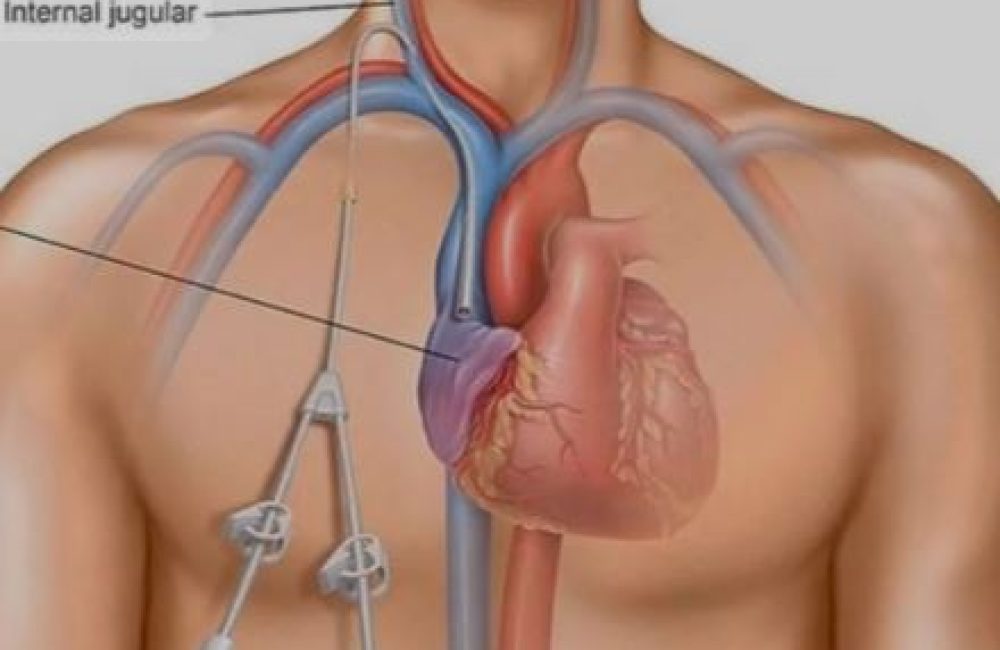
Permacath Insertion is a surgical procedure used to place a tunneled central venous catheter, commonly referred to as a permacath. It provides reliable and long-term vascular access, primarily for patients undergoing hemodialysis. Unlike temporary catheters, a permacath is designed for extended use and is inserted under the skin before reaching a central vein, which reduces infection risks and improves patient comfort.
This procedure is especially important for individuals with end-stage renal disease who require dialysis but do not yet have a functioning arteriovenous fistula (AVF) or graft. It offers immediate access for life-saving dialysis while preserving future vascular options.
A permacath is typically inserted into one of the large central veins, such as:
Internal jugular vein (most common and safest option)
Subclavian vein
Femoral vein (less common for long-term use)
The catheter is tunneled beneath the skin before entering the vein. This subcutaneous tunnel decreases the risk of infection and secures the catheter in place. The external portion of the catheter remains outside the chest wall or neck for easy connection during dialysis.
The catheter usually has two lumens:
Arterial lumen: Removes blood from the patient and carries it to the dialysis machine.
Venous lumen: Returns cleansed blood to the body.
Permacath insertion is performed not because of disease in the vein itself, but as a necessity for vascular access in patients with:
End-stage renal disease (ESRD): When patients require immediate dialysis.
Failure of AVF or graft: If previous vascular access has clotted, failed, or has not matured.
Waiting period for AVF maturation: AVFs may take weeks to months to be usable, so a permacath provides interim access.
Urgent need for hemodialysis: For patients with severe electrolyte imbalances, fluid overload, or uremia.
Risk factors leading to permacath dependence include diabetes, hypertension, obesity, vascular disease, and repeated previous vascular access attempts.
Patients needing permacath insertion typically present with conditions requiring urgent or chronic hemodialysis:
Severe swelling (edema) due to kidney failure
Shortness of breath from fluid overload
Nausea, fatigue, or confusion caused by uremia
High potassium levels (hyperkalemia) threatening heart function
No functional AVF or graft available for dialysis access
Before performing permacath insertion, the clinical team evaluates the patient thoroughly:
Clinical examination: Assessing vascular access sites and general health.
Ultrasound vein mapping: Determines the best vein for safe insertion.
Blood tests: Kidney function tests, electrolyte levels, and coagulation profile.
Imaging: Chest X-ray or fluoroscopy may be used before, during, or after insertion to confirm catheter position.
Medical history: Review of prior vascular procedures, infections, and any contraindications to catheter placement.
Alternative vascular access options include:
Central venous catheters (temporary): Placed directly into the vein without tunneling, used for short-term dialysis access.
Peritoneal dialysis: In some patients, this can replace the need for vascular catheters altogether.
Arteriovenous fistula (AVF): First choice for long-term dialysis access due to better longevity and fewer complications.
Arteriovenous graft (AVG): Considered when native veins are unsuitable.
Permacath (tunneled catheter): Used as an immediate or long-term solution when AVF or graft is not possible.
Permacath insertion is usually performed under local anesthesia with sedation, sometimes combined with imaging guidance. The steps include:
Preparation: Patient is placed in a sterile environment, and the chosen vein is identified (usually internal jugular).
Anesthesia: Local anesthesia is applied at the insertion site.
Vein puncture: A needle is used to access the vein under ultrasound guidance.
Guidewire placement: A guidewire is advanced into the vein to secure the pathway.
Tunneling: A small incision is made in the chest wall, and a tunnel is created under the skin toward the venous entry point.
Catheter placement: The catheter is advanced through the tunnel and into the central vein, with its tip positioned near the heart (superior vena cava/right atrium junction).
Connection check: Blood flow is tested to ensure proper function.
Securing: The catheter is sutured and a dressing applied. Final position is confirmed by chest X-ray.
The entire procedure typically takes 30–60 minutes.
After permacath insertion, patients receive guidance on catheter care and follow-up:
Wound care: Keep the dressing clean and dry to prevent infection.
Monitoring: Regular checks for catheter function and signs of complications.
Flushing protocols: Catheter lumens are flushed with saline or anticoagulant solutions (such as heparin) to prevent clotting.
Activity restrictions: Avoid heavy lifting, pulling, or submerging the catheter site in water.
Follow-up visits: Periodic assessments by the nephrology or vascular access team to plan future AVF or graft creation if possible.
While generally safe, permacath insertion has potential risks:
Infection: Catheter-related bloodstream infections are the most common complication.
Thrombosis: Clots may form inside or around the catheter, obstructing flow.
Bleeding or hematoma: At the insertion or tunneling site.
Catheter malfunction: Poor blood flow, kinking, or displacement.
Vascular injury: Rarely, injury to veins or arteries may occur.
Pneumothorax (collapsed lung): A rare complication, especially with subclavian vein access.
Permacaths provide immediate dialysis access and can remain functional for weeks to months, sometimes even longer if maintained properly. However, they are generally considered a temporary solution until a more permanent access (AVF or AVG) is available.
With proper care, patients can expect good short- to medium-term outcomes, though long-term reliance on permacaths carries increased risks of infection and clotting compared to fistulas or grafts.
Patients should seek medical attention urgently if they notice:
Redness, swelling, or pus at the catheter site
Fever, chills, or other signs of infection
Absence of blood flow during dialysis
Pain, swelling, or numbness in the neck, chest, or arm
Shortness of breath, chest pain, or sudden dizziness
Bleeding or leakage from the catheter site
Permacath insertion is a crucial procedure that provides immediate vascular access for patients requiring hemodialysis, especially when other access options are unavailable or maturing. By tunneling the catheter under the skin and placing it into a central vein, the risk of infection is reduced, and reliable blood flow is achieved.
While permacaths are not intended as permanent solutions, they serve as vital lifelines for patients awaiting fistula or graft placement. With meticulous care, regular monitoring, and timely medical attention for complications, permacath insertion ensures patients receive the life-saving dialysis they need.


Aenean porta orci nam commodo felis hac ridiculus fusce fames maximus erat sed dictumst blandit arcu suspendisse sollicitudin luctus in nec