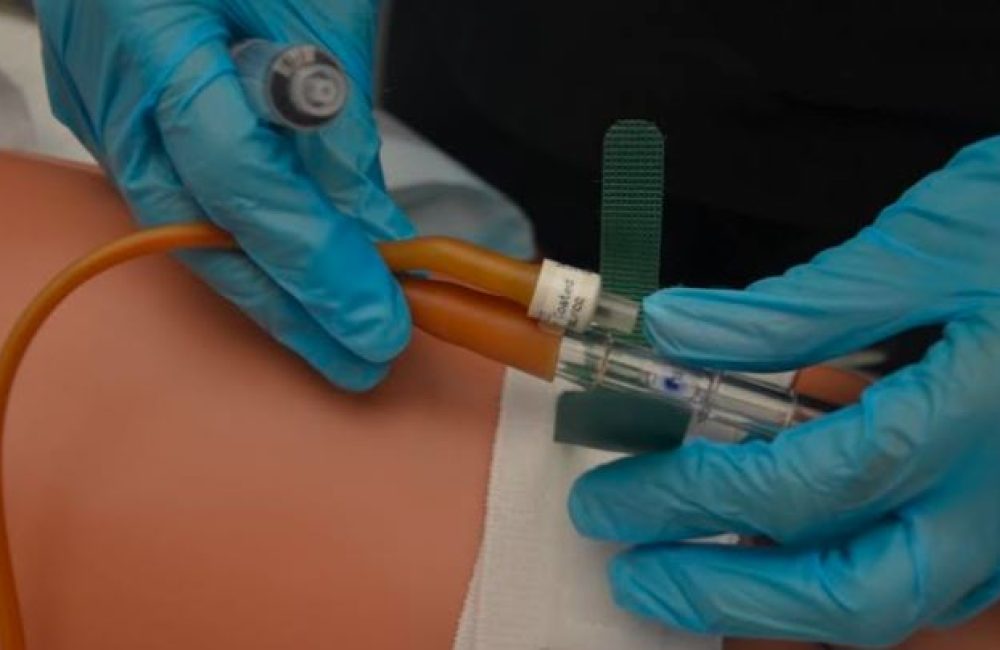
Catheter Insertion is a medical procedure in which a thin, flexible tube is placed into the body to allow the passage of fluids, medications, or to monitor vital functions. Catheters can be inserted into blood vessels, the bladder, or other body cavities, depending on the clinical need. They are widely used in hospitals, clinics, and sometimes at home for patients requiring long-term care.
This procedure is important because it provides access for life-saving treatments such as dialysis, intravenous therapies, drainage of urine, or monitoring of heart function. Catheter insertion must be performed under strict sterile conditions to minimize complications and ensure patient safety.
The anatomy involved in catheter insertion depends on the type of catheter:
Urinary catheter: Inserted through the urethra into the bladder to drain urine.
Central venous catheter (CVC): Inserted into large veins (such as the internal jugular, subclavian, or femoral vein) to deliver medications, fluids, or to measure central venous pressure.
Arterial catheter: Inserted into arteries (commonly the radial artery) for continuous blood pressure monitoring or arterial blood sampling.
Dialysis catheter: Placed in large veins to allow hemodialysis.
In all cases, knowledge of the vascular or urinary anatomy is crucial. Correct positioning ensures proper function and reduces risks such as infection, bleeding, or injury to surrounding tissues.
Catheter insertion is performed for a range of medical indications. Common causes include:
Urinary retention: Due to prostate enlargement, nerve injury, or bladder dysfunction.
Critical illness: Needing close monitoring of fluids, blood pressure, or medication delivery.
End-stage renal disease: Hemodialysis access through central venous or tunneled dialysis catheters.
Surgery: Perioperative catheterization to monitor urine output or administer anesthetic drugs.
Inability to void independently: Patients with spinal cord injury, neurological disorders, or prolonged immobility.
Patients do not usually “present” for catheter insertion with symptoms of the catheter itself; rather, they present with underlying conditions that require the catheter. Examples include:
Urinary issues: Inability to urinate, bladder distension, or urinary obstruction.
Hemodynamic instability: Low blood pressure or shock requiring central venous access.
Need for dialysis: Symptoms of kidney failure such as swelling, fatigue, or electrolyte imbalance.
Critical care needs: Patients requiring intravenous nutrition, long-term antibiotics, or close monitoring.
Diagnosis before catheter insertion involves identifying the medical condition that requires access or drainage. Evaluation includes:
Physical examination: Checking for bladder distension, vascular patency, or infection signs.
Ultrasound or imaging: Used to guide vascular catheter insertion or to confirm placement.
Laboratory tests: Kidney function tests, clotting profiles, or infection markers may be evaluated before placement.
Clinical history: Previous catheterizations, surgeries, or vascular complications are reviewed to select the best site.
Catheter insertion itself is the treatment for the underlying issue of access or drainage. However, alternatives may sometimes be considered:
Non-surgical treatments:
Medications for urinary retention before catheterization.
Peripheral intravenous lines for short-term medication delivery.
Intermittent straight catheterization instead of indwelling urinary catheter.
Surgical treatments:
Suprapubic catheter placement for long-term bladder drainage.
Permanent vascular access such as an arteriovenous fistula for dialysis instead of repeated catheterizations.
The steps for catheter insertion vary depending on the type of catheter:
The genital area is cleaned with antiseptic solution.
A sterile catheter is lubricated and gently inserted into the urethra.
Once urine begins to flow, the catheter is advanced into the bladder.
A balloon at the catheter tip is inflated with sterile water to hold it in place.
The patient is placed in a suitable position, often with ultrasound guidance.
The skin is cleaned and draped under sterile conditions.
A needle is inserted into the target vein, followed by guidewire placement.
The catheter is threaded over the guidewire and secured in place.
Position is confirmed using imaging such as a chest X-ray.
Usually placed in the radial artery at the wrist.
Local anesthesia is applied, and the artery is punctured with a needle.
A catheter is advanced over a guidewire and secured.
Continuous pressure monitoring equipment is connected.
Care after catheter insertion focuses on preventing complications and ensuring proper function:
Hygiene: Keep the catheter site clean and dry.
Monitoring: Regular checks for signs of infection, leakage, or blockage.
Flushing protocols: For vascular catheters, flushing with saline or heparin prevents clot formation.
Patient education: Instruction on how to care for catheters at home if long-term use is required.
Follow-up: Periodic replacement or removal depending on clinical need.
Catheter insertion, while common, carries potential risks:
Infection: The most significant complication, especially with long-term use.
Bleeding or hematoma: At the insertion site.
Thrombosis: Blood clot formation inside vascular catheters.
Injury to nearby structures: Such as arteries, veins, or nerves.
Catheter malfunction: Blockage, leakage, or misplacement.
Discomfort: Irritation, pain, or bladder spasms (for urinary catheters).
With proper technique and care, catheter insertion is generally safe and effective. Short-term catheters often function well without complications, while long-term catheters require more intensive monitoring. The prognosis depends on the underlying medical condition, but a well-placed and maintained catheter improves patient outcomes by enabling effective treatment.
Patients with catheters should seek medical attention if they experience:
Redness, swelling, or pus at the insertion site
Fever, chills, or signs of systemic infection
Absence of urine flow (urinary catheter) or inability to flush a vascular catheter
Severe pain, numbness, or swelling in the limb near the catheter
Leakage of blood, urine, or fluid around the site
Catheter Insertion is a fundamental medical procedure that provides essential access for fluid drainage, dialysis, drug administration, and monitoring in a variety of clinical settings. While it carries some risks, adherence to sterile technique, regular monitoring, and timely medical care help ensure safety and effectiveness. Patients should work closely with their healthcare team to understand their catheter type, follow care instructions, and seek prompt medical attention if complications arise.


Aenean porta orci nam commodo felis hac ridiculus fusce fames maximus erat sed dictumst blandit arcu suspendisse sollicitudin luctus in nec