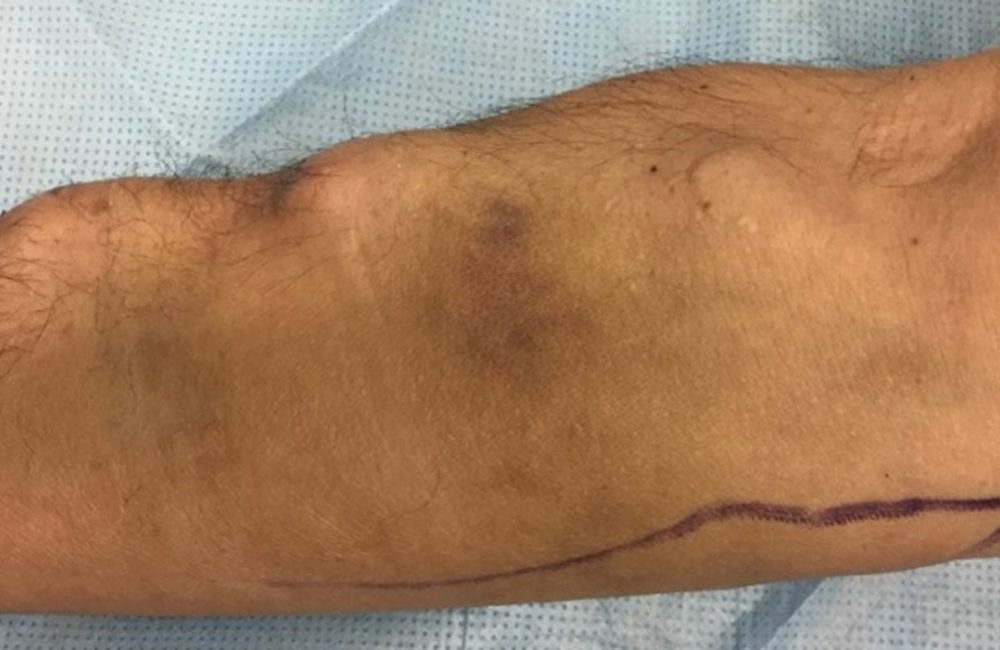
A Radio-cephalic arteriovenous fistula (AVF) is a surgically created connection between the radial artery and the cephalic vein at the wrist. It is commonly referred to as the Brescia-Cimino fistula, after the doctors who first described it.
This type of AVF is considered the first choice for vascular access in patients with end-stage renal disease (ESRD) who require long-term hemodialysis. It is often preferred because it is associated with fewer complications, better long-term outcomes, and preservation of more proximal vessels for future access if needed.
To understand a radio-cephalic AVF, it helps to know the relevant anatomy:
Radial artery: A major artery in the forearm, running along the thumb side, which supplies oxygen-rich blood to the hand.
Cephalic vein: A superficial vein on the lateral side of the forearm and arm, easily accessible for cannulation.
When these two vessels are surgically connected, arterial blood flows directly into the vein. This increases pressure and blood flow in the vein, causing it to enlarge and its walls to thicken, a process known as maturation. Once matured, the vein can be repeatedly punctured for dialysis without collapsing.
A radio-cephalic AVF is not caused by disease itself; rather, it is created surgically to provide reliable vascular access for hemodialysis. The need for such access arises in patients with:
Chronic kidney disease (CKD) progressing to end-stage renal disease (ESRD)
Diabetes mellitus – one of the leading causes of ESRD
Hypertension – long-term uncontrolled high blood pressure damages the kidneys
Glomerulonephritis and other kidney disorders
Risk factors that may affect AVF creation or maturation include:
Advanced age
Peripheral vascular disease
History of failed AVFs
Small or fragile blood vessels
Following AVF creation, patients typically notice:
A thrill (vibration) felt over the site, indicating good blood flow.
A bruit (whooshing sound) heard with a stethoscope.
Gradual enlargement of the cephalic vein as it matures.
Signs of complications may include:
Pain, swelling, or redness at the fistula site
Hand numbness, tingling, or coldness (suggesting steal syndrome)
Failure to mature, where the vein does not enlarge sufficiently
Signs of infection – warmth, pus, or fever
Diagnosis and monitoring of a radio-cephalic AVF involve:
Clinical examination: Checking for thrill, bruit, and vein enlargement.
Ultrasound mapping: Preoperative imaging to assess vessel size and quality.
Doppler ultrasound: Postoperative tool to measure blood flow and detect narrowing or blockage.
Fistulogram (angiography): Used if stenosis, thrombosis, or structural problems are suspected.
The radio-cephalic AVF is a treatment itself, but maintaining its function often requires ongoing care.
Non-surgical management:
Daily monitoring of the fistula for thrill and bruit.
Avoiding blood pressure measurements, IV lines, or tight clothing on the fistula arm.
Patient education on hygiene and infection prevention.
Surgical / Interventional management:
Creation of AVF (initial procedure).
Angioplasty or stenting to treat narrowing (stenosis).
Thrombectomy to remove clots.
Revision surgery or alternative access creation if the fistula fails.
When surgical intervention is required, the steps generally include:
Assessment: Imaging and vascular
The steps in creating a radio-cephalic AVF include:
Preoperative vessel mapping with ultrasound to select suitable artery and vein.
Anesthesia – usually local, sometimes regional.
Small incision at the wrist to expose the radial artery and cephalic vein.
Mobilization of vessels for safe handling.
Anastomosis (connection) – the surgeon joins the artery to the vein, allowing arterial blood flow into the vein.
Checking for thrill and bruit to confirm successful creation.
Closure of the incision.
The operation generally takes about 1–2 hours and is often performed on an outpatient basis.
studies determine the extent of damage.
Anesthesia: Local, regional, or general depending on procedure complexity.
Debridement or corrective surgery: Removal of necrotic tissue, bone infection, or realignment of deformities.
Vascular procedures: Angioplasty uses a balloon or stent to open blocked arteries, while bypass surgery creates an alternate path for blood flow.
Closure and dressing: Wound is carefully managed to reduce infection risk.
Postoperative monitoring: Regular checks for healing, circulation, and infection signs.
After surgery, care and monitoring are essential for successful AVF maturation:
Arm elevation to reduce swelling.
Hand and arm exercises, such as squeezing a rubber ball, to encourage vein enlargement.
Daily monitoring for thrill and bruit to confirm patency.
Avoiding trauma or heavy lifting with the fistula arm.
Regular follow-up with the vascular surgeon or nephrologist to check readiness for use.
The maturation process usually takes 6–12 weeks, after which the fistula can be used for dialysis.
Although radio-cephalic AVFs are generally safe, complications may arise:
Failure to mature – common in patients with small or diseased vessels.
Infection at the surgical site.
Stenosis (narrowing) of the vein, reducing blood flow.
Thrombosis (clot formation) leading to blockage.
Steal syndrome – reduced blood flow to the hand, causing pain, numbness, or ulcers.
Aneurysm formation due to repeated needle punctures.
Radio-cephalic AVFs are known for their long-term durability and low complication rates when successful. They are considered the best option for patients starting dialysis because they preserve more proximal vessels for future access.
With proper care and timely intervention for complications, many radio-cephalic AVFs can function effectively for several years.
Patients should seek medical attention if they notice:
Loss of thrill or bruit (possible blockage).
Severe pain, coldness, or numbness in the hand.
Signs of infection – redness, swelling, discharge, or fever.
Sudden swelling of the arm or hand.
Excessive or prolonged bleeding after dialysis sessions.
The Radio-cephalic Arteriovenous Fistula remains the gold standard for hemodialysis access, offering long-term durability and fewer complications than other types of access. While the procedure is relatively simple, its success depends on careful patient selection, skilled surgical technique, and consistent monitoring.
Patients with advanced kidney disease should consult their healthcare provider early about AVF creation to ensure the best outcomes and improve dialysis efficiency.

Aenean porta orci nam commodo felis hac ridiculus fusce fames maximus erat sed dictumst blandit arcu suspendisse sollicitudin luctus in nec