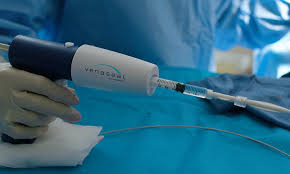
Venaseal is an innovative, minimally invasive treatment for varicose veins that uses a medical adhesive to close diseased veins without the need for heat or thermal energy. Unlike traditional thermal ablation techniques such as radiofrequency or laser ablation, Venaseal employs a proprietary cyanoacrylate glue to seal the vein, offering a less painful and quicker recovery option. This non-thermal glue ablation method is gaining popularity due to its effectiveness, reduced post-procedural discomfort, and elimination of the need for tumescent anesthesia. Understanding Venaseal is important for patients and healthcare providers seeking advanced, patient-friendly solutions for chronic venous insufficiency and varicose veins.
The venous system in the legs consists of superficial veins, deep veins, and perforator veins that connect the two. The great saphenous vein (GSV) and small saphenous vein (SSV) are the main superficial veins commonly affected by varicosities. Healthy veins have one-way valves that prevent blood from flowing backward. When these valves become incompetent, blood pools in the veins, causing them to enlarge and become varicose. This condition is known as chronic venous insufficiency (CVI). Understanding the anatomy of the venous system is crucial for targeting the diseased veins during treatment.
Several factors contribute to the development of varicose veins and venous insufficiency:
Patients with varicose veins often present with:
Diagnosis of venous insufficiency and varicose veins involves:
Treatment depends on the severity of symptoms and vein involvement:
Venaseal is generally safe, but potential risks include:
Venaseal offers excellent long-term outcomes with vein closure rates comparable to thermal ablation. Patients experience less pain and faster recovery. Most report significant symptom relief and improved quality of life. Recurrence rates are low, and the procedure can be repeated if necessary.
Venaseal represents a breakthrough in the treatment of varicose veins by offering a non-thermal, minimally invasive option that reduces pain and recovery time. Understanding the anatomy, causes, symptoms, and treatment options empowers patients to make informed decisions. If you suffer from varicose veins or chronic venous insufficiency, consult a vascular specialist to explore whether Venaseal or other therapies are right for you. With advances like Venaseal, relief from varicose veins is safer, easier, and more effective than ever before.

Aenean porta orci nam commodo felis hac ridiculus fusce fames maximus erat sed dictumst blandit arcu suspendisse sollicitudin luctus in nec