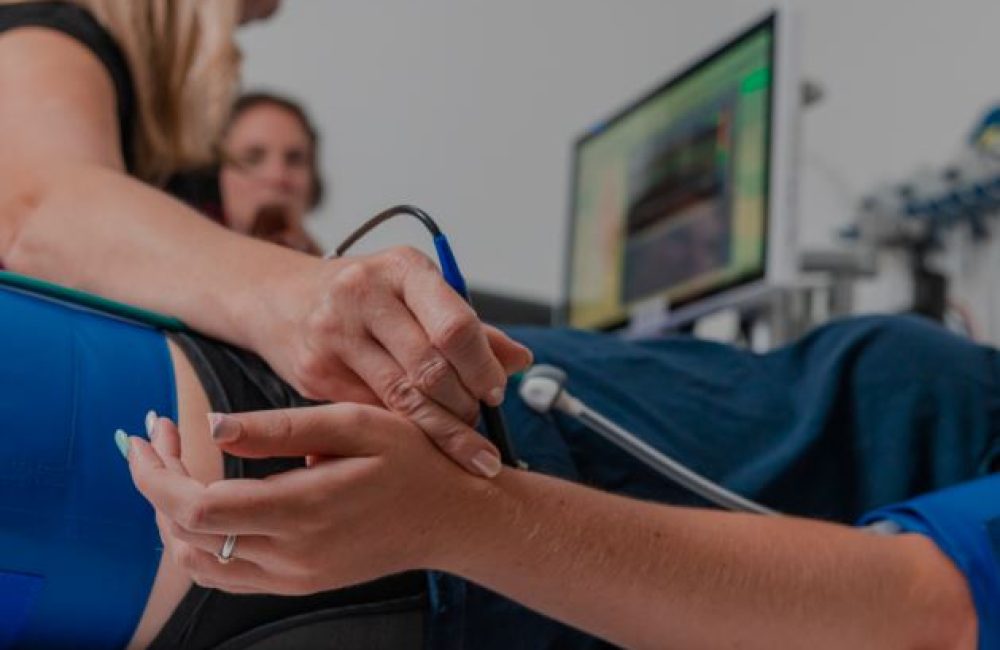
Segmental Blood Pressure (BP) and Pulse Volume Recording (PVR) are non-invasive diagnostic tests used to evaluate blood flow in the arteries of the legs. These tests are essential for detecting and localizing Peripheral Artery Disease (PAD)—a condition in which narrowed or blocked arteries reduce blood supply to the limbs.
Unlike a single pressure measurement at the ankle (ABI), segmental BP and PVR provide more detailed information, identifying the level and severity of arterial obstruction. Early and accurate diagnosis helps prevent complications such as ulcers, gangrene, or even limb loss, while also addressing the increased cardiovascular risks associated with PAD.
Blood supply to the legs flows from the aorta into the iliac, femoral, popliteal, tibial, and pedal arteries. Obstructions may occur at any point, leading to reduced perfusion downstream.
Segmental Blood Pressure: This test measures systolic pressures at multiple levels of the leg—typically the thigh, calf, ankle, and sometimes the foot. Pressure differences between segments help pinpoint the location of blockages.
Pulse Volume Recording (PVR): PVR uses blood pressure cuffs and sensors to record changes in limb volume during each heartbeat. These waveforms reflect arterial blood flow quality and can remain interpretable even when arteries are calcified (a limitation of ABI).
Together, segmental BP and PVR provide complementary information: where the blockage is and how much it affects blood flow.
Segmental BP and PVR are used to detect arterial disease rather than being conditions themselves. Common causes of abnormal results include:
Atherosclerosis: Progressive plaque buildup is the leading cause of PAD.
Diabetes mellitus: Causes both arterial narrowing and calcification.
Hypertension: Chronic pressure damages arterial walls.
High cholesterol: Promotes plaque formation and vessel narrowing.
Smoking: Accelerates vascular disease.
Chronic kidney disease: Contributes to arterial calcification and PAD.
Advanced age: Arterial stiffening and increased risk of atherosclerosis.
Patients referred for segmental BP/PVR testing often show symptoms consistent with PAD, such as:
Intermittent claudication: Leg pain or cramping with walking that improves with rest.
Rest pain: Persistent pain in the feet or toes, especially at night.
Non-healing wounds or ulcers on the legs or feet.
Skin changes: Coolness, pallor, or discoloration.
Diminished pulses in the legs or feet.
Gangrene: In severe or advanced disease.
Sometimes, individuals are asymptomatic but have multiple risk factors, making these tests valuable for screening.
Segmental BP and PVR are performed together to maximize diagnostic accuracy.
Clinical Examination: History of symptoms and risk factors, physical examination, and pulse assessment.
Segmental BP Measurement:
Blood pressure cuffs are placed at different levels of the leg (high thigh, low thigh, calf, ankle).
Pressures are measured using a Doppler probe.
Pressure drops >20 mmHg between segments suggest significant arterial narrowing between those points.
Pulse Volume Recording (PVR):
Cuffs at similar levels detect changes in limb volume with each heartbeat.
Normal waveform: sharp upstroke and downstroke with a prominent dicrotic notch.
Abnormal waveform: flattened or dampened, indicating reduced blood flow.
Interpretation combines both tests:
Segmental pressures localize the blockage.
PVR waveforms provide qualitative information on severity and help in cases where calcified vessels make pressures unreliable.
Further imaging (Duplex ultrasound, CT angiography, MR angiography, or catheter angiography) may be performed for surgical planning.
Abnormal segmental BP and PVR findings guide treatment for PAD:
Lifestyle modification: Smoking cessation, exercise therapy, weight control.
Medical therapy: Antiplatelet agents (aspirin, clopidogrel), statins, blood pressure and blood sugar control, medications for claudication (cilostazol).
Wound care: Specialized management for ulcers and skin breakdown.
Endovascular therapy: Balloon angioplasty, stenting, atherectomy.
Bypass surgery: Creating a graft to reroute blood around the blocked artery.
Amputation: Reserved for severe, non-reconstructable ischemia with tissue loss.
These are non-invasive, outpatient procedures:
Patient lies flat in a warm room to avoid vasoconstriction.
Blood pressure cuffs are applied at multiple levels on both legs.
A Doppler probe and recording equipment measure pressures at each segment.
PVR sensors record waveforms simultaneously.
Data is analyzed to determine:
Pressure gradients across segments.
Quality of pulse volume waveforms.
Results are available immediately and interpreted by a vascular specialist.
Since segmental BP and PVR are diagnostic, they do not require postoperative care. However, if the results lead to intervention (angioplasty, stenting, or surgery), recovery involves:
Supervised walking/exercise therapy.
Wound and foot care to prevent infections.
Regular follow-up visits to monitor blood flow.
Repeat segmental BP/PVR testing to evaluate success of treatment.
Segmental BP and PVR are extremely safe. Possible issues include:
Temporary discomfort from cuff inflation.
Rare skin irritation or bruising.
Inaccuracy in readings in patients with severe arterial calcification (segmental BP).
No serious risks are associated with the tests themselves.
The outlook depends on the severity of PAD:
Normal results: Suggest adequate circulation.
Mild-to-moderate abnormalities: Often managed with medical therapy and lifestyle changes.
Severe abnormalities: May require revascularization; untreated, can progress to critical limb ischemia and limb loss.
Importantly, PAD also signals increased risk of heart attack and stroke, making systemic cardiovascular management essential.
You should seek medical evaluation if you experience:
Leg pain or cramping during walking.
Rest pain in the feet or toes.
Non-healing wounds, ulcers, or blackened toes.
Noticeably cold, pale, or discolored feet.
Risk factors such as diabetes, smoking, high blood pressure, or high cholesterol with any suspicious symptoms.
Segmental Blood Pressure and Pulse Volume Recording (PVR) are simple, non-invasive tests that provide crucial insights into the presence, severity, and location of Peripheral Artery Disease. They help clinicians tailor treatment strategies, whether medical, lifestyle-based, or surgical, to improve circulation and prevent serious complications.
Anyone with symptoms or risk factors for PAD should consult a healthcare professional. Early diagnosis and treatment not only save limbs but also protect overall heart and vascular health.


Aenean porta orci nam commodo felis hac ridiculus fusce fames maximus erat sed dictumst blandit arcu suspendisse sollicitudin luctus in nec