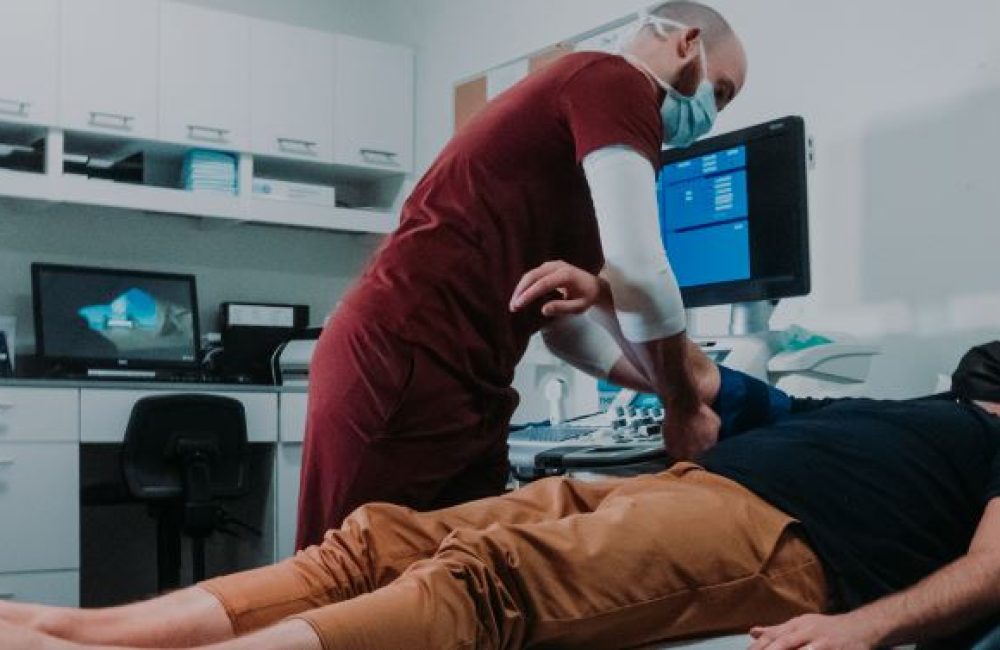
The Ankle-Brachial Index (ABI) and the Toe-Brachial Index (TBI) are simple, non-invasive diagnostic tests used to evaluate blood flow in the lower extremities. These tests are particularly important in the detection of Peripheral Artery Disease (PAD), a condition where narrowed arteries reduce blood supply to the legs and feet. Early diagnosis is critical, as PAD not only affects mobility and quality of life but also signals increased risk for heart attack and stroke.
ABI and TBI provide objective measurements that help clinicians assess circulation, guide treatment decisions, and monitor disease progression or response to therapy.
Blood supply to the lower limbs comes from the aorta, which branches into the iliac arteries, continuing as the femoral, popliteal, tibial, and finally dorsalis pedis and plantar arteries. Any narrowing (stenosis) or blockage (occlusion) along this pathway can impair circulation.
ABI compares the blood pressure in the ankle with that in the arm (brachial artery).
TBI compares the blood pressure in the great toe with that in the arm.
The toe arteries are less affected by arterial wall calcification, which often makes ABI unreliable in patients with diabetes, kidney disease, or advanced age. In such cases, TBI provides a more accurate reflection of distal perfusion.
ABI and TBI are not conditions themselves but diagnostic tests for detecting arterial disease. Common causes and risk factors leading to abnormal results include:
Atherosclerosis: Plaque buildup in the arteries causing narrowing and stiffness.
Diabetes mellitus: Accelerates vascular disease and contributes to arterial calcification.
Hypertension: Damages arterial walls over time.
Hyperlipidemia: High cholesterol increases plaque formation.
Smoking: Strongly linked to PAD development.
Chronic kidney disease: Promotes vascular calcification.
Age (over 60 years): Higher prevalence of arterial disease.
Patients who undergo ABI/TBI testing often present with signs suggestive of PAD, such as:
Leg pain or cramping with walking (intermittent claudication)
Rest pain in the feet or toes, especially at night
Non-healing wounds or ulcers on the feet or legs
Coolness, paleness, or color changes in the skin
Reduced or absent pulses in the legs or feet
Some patients may remain asymptomatic, especially in early stages, making ABI/TBI valuable for screening high-risk groups.
ABI and TBI tests are simple bedside procedures:
Clinical Examination: History of risk factors, symptoms, and physical exam (checking pulses, skin condition, ulceration).
ABI Measurement:
A blood pressure cuff is placed on the arm and ankle.
A handheld Doppler device detects arterial signals.
The ankle pressure is divided by the brachial pressure.
Interpretation of ABI values:
1.0 – 1.3: Normal
0.91 – 0.99: Borderline
0.41 – 0.90: Mild to moderate PAD
≤0.40: Severe PAD
1.3: Non-compressible arteries (likely calcification)
TBI Measurement:
Similar method, but with a cuff around the great toe.
Toe pressure divided by brachial pressure.
Normal TBI: >0.7
Abnormal: ≤0.7 suggests PAD.
Additional tests may include duplex ultrasound, CT/MR angiography, or conventional angiography if intervention is planned.
ABI/TBI themselves are diagnostic tools, but abnormal results direct treatment for PAD:
Lifestyle modification: Smoking cessation, exercise programs, weight control.
Medical therapy: Antiplatelets (aspirin, clopidogrel), statins, blood pressure and diabetes control, vasodilator medications (cilostazol).
Wound care: For ulcers and non-healing wounds.
Endovascular procedures: Balloon angioplasty, stenting, atherectomy.
Surgical revascularization: Bypass grafting for extensive disease.
Amputation: Considered only in cases of severe, non-reconstructable ischemia.
ABI and TBI tests are quick, painless, and performed in outpatient settings:
Patient rests supine for at least 10 minutes.
Blood pressure cuffs are applied to both arms and ankles (and toes for TBI).
A Doppler probe detects arterial signals.
Pressures are measured systematically.
Ratios are calculated (ankle-to-brachial or toe-to-brachial).
Results are interpreted immediately by the clinician.
Since ABI/TBI are non-invasive diagnostic tests, no postoperative care is needed. However, if treatment is initiated based on results (such as angioplasty or surgery), rehabilitation may include:
Supervised walking programs to improve circulation.
Wound and foot care to prevent infections.
Ongoing medication adherence.
Regular follow-up ABI/TBI to monitor improvement.
ABI/TBI testing is extremely safe. Rare minor risks include:
Temporary discomfort from cuff inflation.
Inaccurate readings in cases of severe arterial calcification (especially ABI).
Toe injury if the cuff is inflated too tightly in patients with fragile skin.
Normal ABI/TBI: Suggests good circulation, though does not exclude early disease.
Mild-to-moderate abnormalities: Usually manageable with medication and lifestyle changes.
Severe abnormalities: Higher risk of limb-threatening ischemia, non-healing ulcers, and potential amputation if untreated.
Importantly, an abnormal ABI/TBI also predicts increased cardiovascular risk, emphasizing the need for systemic risk management.
Medical attention should be sought if:
Leg pain occurs while walking or at rest.
Feet or toes feel persistently cold or discolored.
Wounds or ulcers fail to heal.
ABI >1.3 or TBI ≤0.7 is reported.
You have diabetes, kidney disease, or are over 60 with cardiovascular risk factors.
The Ankle-Brachial Index (ABI) and Toe-Brachial Index (TBI) are vital diagnostic tools for detecting and managing Peripheral Artery Disease. Quick, non-invasive, and highly informative, these tests guide treatment decisions and help prevent serious complications such as limb loss and cardiovascular events.
Anyone with symptoms of poor leg circulation—or risk factors such as diabetes, smoking, or hypertension—should discuss ABI/TBI testing with a healthcare provider. Early detection truly saves both limbs and lives.


Aenean porta orci nam commodo felis hac ridiculus fusce fames maximus erat sed dictumst blandit arcu suspendisse sollicitudin luctus in nec