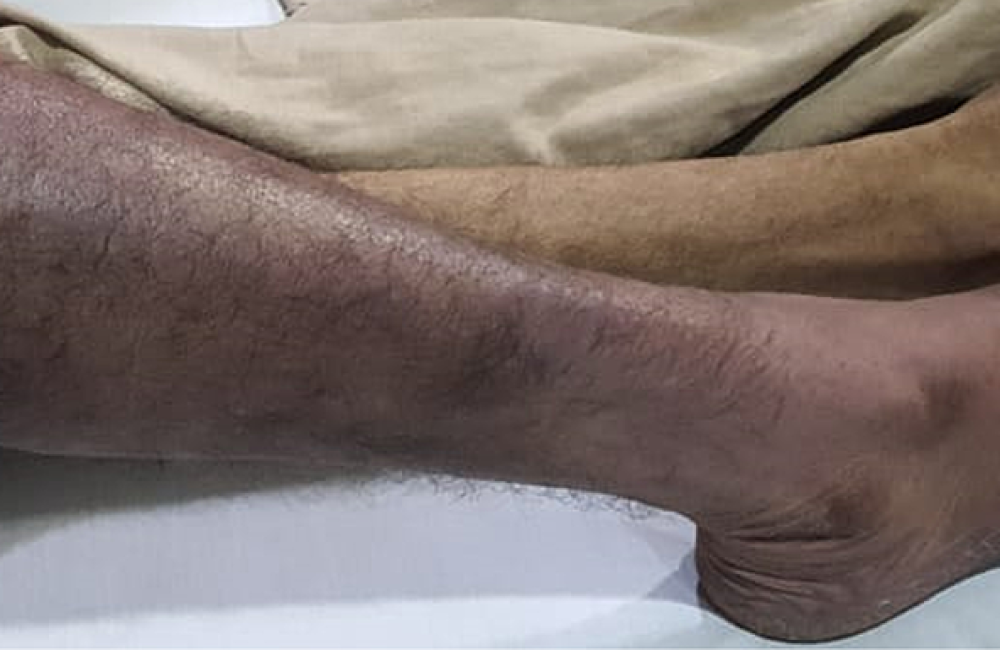
Deep Vein Pathology

Acute Limb Ischemia

Introduction / Overview

Deep vein pathology refers to disorders affecting the deep veins, primarily in the lower extremities. These conditions can range from inflammation and thrombosis to chronic venous insufficiency, significantly impacting a patient’s quality of life. Among these, Deep Vein Thrombosis (DVT) is the most common and clinically significant, as it can lead to life-threatening complications like pulmonary embolism. Understanding deep vein pathology is crucial for early diagnosis, effective treatment, and prevention of serious outcomes.

Anatomy / Background

The deep venous system consists of veins located deep within the muscles, responsible for returning deoxygenated blood from the limbs back to the heart. In the lower limbs, major deep veins include the femoral, popliteal, and iliac veins. These veins are equipped with one-way valves that prevent blood from flowing backward, ensuring efficient circulation. The deep veins run parallel to arteries and are surrounded by muscle tissue, which aids venous return through contraction.

Causes / Etiology

Deep vein pathology, particularly DVT, arises from factors described by Virchow’s triad:

Symptoms / Clinical Presentation

Patients with deep vein pathology may present with:

Diagnosis

Treatment Options

Non-Surgical Treatments

  • Anticoagulation Therapy: The cornerstone of DVT treatment, using agents such as heparin, low molecular weight heparin, warfarin, or direct oral anticoagulants (DOACs). These prevent clot extension and embolization.
  • Compression Stockings: Help reduce swelling and prevent post-thrombotic syndrome.
  • Lifestyle Modifications: Encouraging mobility, weight management, and hydration.

Surgical and Procedural Treatments

  • Thrombolysis: Catheter-directed administration of clot-dissolving drugs in selected cases.
  • Thrombectomy: Surgical removal of the clot, typically reserved for extensive or limb-threatening thrombosis.
  • Venous Stenting: Used to treat chronic venous obstruction.
  • Inferior Vena Cava (IVC) Filters: Placed to prevent pulmonary embolism in patients who cannot receive anticoagulation.

Procedure Details (If Surgical or Procedural)

Catheter-Directed Thrombolysis

  1. Preparation: Patient is positioned, and local anesthesia is administered.
  2. Access: A catheter is inserted into a peripheral vein, often in the groin.
  3. Imaging Guidance: Fluoroscopy guides the catheter to the clot site.
  4. Drug Delivery: Thrombolytic agents (e.g., tissue plasminogen activator) are infused directly into the thrombus.
  5. Monitoring: The procedure may last several hours to days, with periodic imaging to assess clot dissolution.
  6. Completion: Once the clot is resolved, the catheter is removed.

Surgical Thrombectomy

  1. Anesthesia: General or regional anesthesia is administered.
  2. Incision: A surgical cut is made over the affected vein.
  3. Clot Removal: The vein is opened, and the thrombus is extracted.
  4. Closure: The vein and skin are sutured.
  5. Postoperative Monitoring: Patients are observed for bleeding and complications.

Postoperative Care / Rehabilitation

Risks and Complications

Prognosis

With timely diagnosis and appropriate treatment, most patients recover well. Anticoagulation significantly reduces the risk of pulmonary embolism and recurrence. However, some may develop chronic venous insufficiency or post-thrombotic syndrome, requiring long-term management.

When to See a Doctor

Conclusion

Deep vein pathology encompasses a range of conditions that can have serious health consequences if untreated. Understanding the anatomy, causes, symptoms, and treatment options is essential for effective management. If you suspect deep vein issues, prompt consultation with a healthcare professional is vital to ensure timely diagnosis and appropriate care. Maintaining an active lifestyle and managing risk factors can also help prevent these conditions.
Explore more:

Welcome to
Dr Sahaja Vascular Surgeon

Aenean porta orci nam commodo felis hac ridiculus fusce fames maximus erat sed dictumst blandit arcu suspendisse sollicitudin luctus in nec


Make an Appointment.