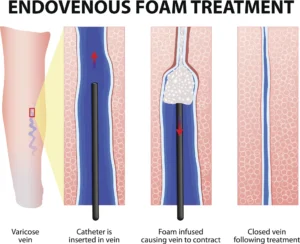
Foam sclerotherapy is a minimally invasive medical procedure used to treat varicose veins and spider veins, common conditions affecting millions worldwide. This technique involves injecting a specially formulated foam solution into affected veins, causing them to collapse and eventually fade. Foam sclerotherapy has gained popularity due to its effectiveness, safety profile, and quick recovery time compared to traditional surgical methods. Understanding foam sclerotherapy is important for individuals seeking treatment for venous insufficiency, as it offers a less invasive alternative with excellent cosmetic and therapeutic outcomes.
To appreciate foam sclerotherapy, it is essential to understand the anatomy of the venous system in the legs. Veins are blood vessels responsible for returning deoxygenated blood from the body back to the heart. In the legs, superficial veins lie close to the skin, while deep veins are located within the muscles. Connecting these two systems are perforator veins.
Veins contain one-way valves that prevent blood from flowing backward. When these valves become weak or damaged, blood can pool in the veins, causing them to enlarge and become varicose. This condition is known as chronic venous insufficiency. Varicose veins are often visible as bulging, twisted veins, while spider veins are smaller, red or blue veins near the skin surface.
Several factors contribute to the development of varicose veins and spider veins, including:
Patients with varicose veins may experience a range of symptoms, including:
Spider veins, while often asymptomatic, may cause cosmetic concerns and mild discomfort.
Treatment for varicose veins ranges from conservative measures to surgical interventions:
Conservative Treatments:
Minimally Invasive Procedures:
Surgical Treatments:
Foam sclerotherapy is often preferred for its simplicity, outpatient nature, and minimal discomfort.
Foam sclerotherapy offers excellent outcomes for most patients:
Foam sclerotherapy is a safe, effective, and minimally invasive treatment for varicose and spider veins. By understanding the anatomy, causes, symptoms, and treatment options, patients can make informed decisions about their care. The procedure offers quick recovery and significant symptom relief, improving both health and appearance. If you suffer from venous insufficiency, consult a qualified healthcare professional to explore whether foam sclerotherapy is right for you. Early intervention can prevent complications and enhance your quality of life.

Aenean porta orci nam commodo felis hac ridiculus fusce fames maximus erat sed dictumst blandit arcu suspendisse sollicitudin luctus in nec