
Thoracic Outlet Syndrome (TOS) refers to a group of conditions caused by compression of the nerves and/or blood vessels as they pass through the thoracic outlet—the narrow space between the collarbone and the first rib. One of the structural abnormalities that can lead to TOS is a cervical rib, an extra rib that arises from the seventh cervical vertebra in the neck.
When conservative treatments fail, cervical rib excision may be performed to relieve pressure on the affected structures. This surgical procedure can significantly reduce symptoms, improve quality of life, and prevent complications such as blood clots or nerve damage.
The thoracic outlet is the passageway for important neurovascular structures, including:
The brachial plexus (nerves supplying the arm).
The subclavian artery (supplying blood to the arm).
The subclavian vein (draining blood from the arm).
A cervical rib is an extra rib that develops above the first rib, present in about 0.5–1% of the population. While many people with cervical ribs remain asymptomatic, others develop TOS due to compression of the nearby nerves or blood vessels.
The type of TOS depends on the structure affected:
Neurogenic TOS: Compression of brachial plexus nerves (most common).
Venous TOS: Compression of the subclavian vein.
Arterial TOS: Compression of the subclavian artery (least common, but serious).
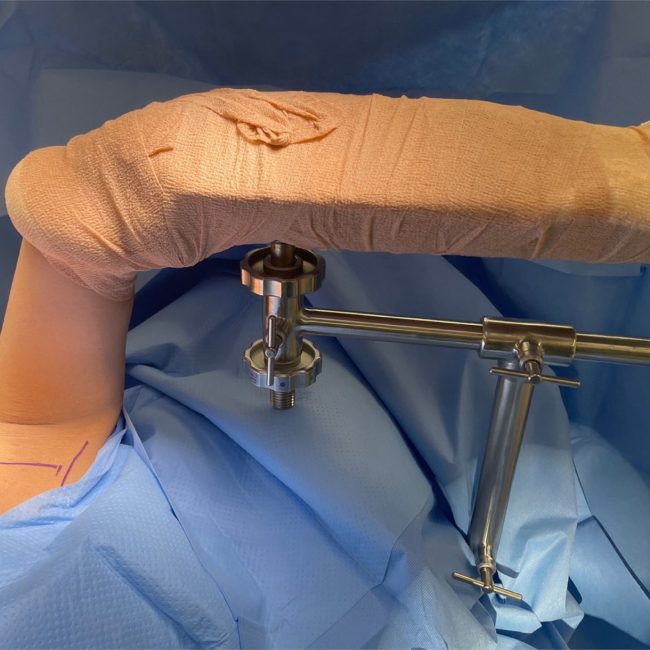
The primary cause of cervical rib–related TOS is the presence of the extra rib itself. Additional contributing factors may include:
Anatomical variations: Fibrous bands or abnormal muscle insertions.
Repetitive arm movements: Overhead activity, heavy lifting, or certain occupations.
Poor posture: Drooping shoulders or forward head posture that narrows the thoracic outlet.
Trauma: Whiplash injuries or fractures can worsen compression.
Growth of cervical rib over time: May become symptomatic in young adults.
Symptoms vary depending on whether nerves, veins, or arteries are compressed:
Neurogenic TOS:
Numbness, tingling, or weakness in the arm and hand.
Pain in the neck, shoulder, or arm.
Wasting of hand muscles in severe cases.
Venous TOS:
Arm swelling and heaviness.
Blue or discolored arm.
Prominent veins around the shoulder/chest.
Arterial TOS:
Coldness and paleness of the hand.
Weak or absent pulse in the arm.
Pain and fatigue in the arm with activity.
In severe cases, blood clots or aneurysms may form.
Diagnosis involves a combination of history, physical examination, and imaging.
Clinical Examination:
Assessment of pulse changes with arm movement.
Provocative maneuvers (e.g., Adson’s test, Roos test) to reproduce symptoms.
Imaging and Investigations:
X-rays: Reveal presence of cervical rib.
Duplex ultrasound: Evaluates blood flow in arteries and veins.
CT or MRI scans: Detailed imaging of vascular and nerve compression.
Nerve conduction studies/EMG: Assess brachial plexus function.
Venography or arteriography: Used in vascular cases to visualize compression and clotting.
Treatment usually starts with non-surgical measures, progressing to surgery if symptoms persist or complications develop.
Physical therapy: Strengthening and stretching exercises to improve posture and relieve pressure.
Pain management: Medications for nerve pain or inflammation.
Activity modification: Avoiding repetitive overhead use of arms.
Anticoagulants or thrombolysis: In venous or arterial TOS with clots.
If conservative therapy fails or if vascular compromise is severe, cervical rib excision is considered. The surgery removes the cervical rib (and sometimes the first rib or fibrous bands) to decompress the thoracic outlet.
The surgical steps may vary slightly depending on the approach (supraclavicular, transaxillary, or posterior). A common method is the supraclavicular approach:
Anesthesia: General anesthesia is administered.
Incision: A small incision is made above the collarbone.
Exposure: The surgeon carefully identifies and protects nerves and blood vessels.
Resection: The cervical rib, and occasionally associated fibrous bands or part of the first rib, is removed.
Closure: The incision is closed, and a drain may be placed temporarily.
The procedure usually takes 1–2 hours. Patients are typically discharged within a few days.
Recovery involves:
Hospital stay: Short, usually 1–3 days.
Pain control: Managed with medications.
Physiotherapy: Initiated soon after surgery to restore mobility, strengthen muscles, and prevent stiffness.
Activity modification: Avoid heavy lifting for several weeks.
Follow-up: Regular check-ups to monitor wound healing, symptom relief, and vascular function.
Most patients return to normal activities within 4–6 weeks, although full nerve recovery may take longer.
As with any surgery, risks exist, though they are uncommon in experienced hands:
Infection or bleeding.
Injury to nerves or blood vessels.
Persistent or recurrent symptoms.
Pneumothorax (air leakage into chest cavity).
Scarring or chronic pain.
Outcomes after cervical rib excision are generally favorable:
Neurogenic TOS: 70–90% of patients experience significant relief.
Vascular TOS: Surgery effectively prevents recurrence of clots or arterial complications.
Recurrence: Rare, though some patients may continue to have mild symptoms due to chronic nerve damage before surgery.
Early treatment leads to better outcomes, especially in preventing permanent nerve or vascular damage.
Seek medical advice if you experience:
Persistent arm or shoulder pain, numbness, or tingling.
Weakness or wasting of hand muscles.
Swelling, discoloration, or coldness in the arm.
History of blood clots in the upper limb.
Worsening symptoms despite physical therapy.
Thoracic Outlet Syndrome caused by a cervical rib can lead to disabling nerve or vascular symptoms if left untreated. While many patients improve with non-surgical therapy, others may require cervical rib excision surgery to achieve lasting relief and prevent complications.
Thanks to advances in surgical techniques, the procedure is safe and effective, with most patients regaining normal arm function and quality of life.
If you experience symptoms suggestive of TOS, consult a vascular or thoracic surgeon promptly. Early diagnosis and treatment are key to preventing long-term complications and ensuring the best outcomes.


Aenean porta orci nam commodo felis hac ridiculus fusce fames maximus erat sed dictumst blandit arcu suspendisse sollicitudin luctus in nec